A Different Perspective

Sandrine Cartegnie, occupational physician and volunteer firefighter doctor with the Réunion fire and rescue service (SDIS)
An occupational physician also qualified in forensic medicine, Sandrine Cartegnie has been a volunteer firefighter doctor in Réunion, a French overseas department in the Indian Ocean, since 2023. She does not go out on emergency calls. She assesses firefighters’ fitness for duty, takes part in training and, in some circumstances, provides medical support during operations, bringing the outlook of a preventive medicine doctor.
From northern France to Réunion
Born in Valenciennes, in northern France, Sandrine Cartegnie studied medicine at the University of Lille. During her residency she followed a combined programme in occupational and forensic medicine, which included a placement at the Lille poison control centre. She went on practising in both fields for several years in the Nord department, and then in Réunion from 2011.
She has been an occupational physician since 2008 and holds the French specialist diploma in the discipline. Her medical doctoral thesis dealt with domestic violence, and her specialty dissertation with violence at work. Also qualified in forensic medicine, she practised it in hospital from 2008 to 2015. She has completed further training in victimology, toxicology, maritime medicine, diving medicine and aviation medicine.
Today she works mainly as an occupational physician in an occupational health service shared by several companies. Since 2023 she has also been a volunteer firefighter doctor, and she is a reservist doctor.
A question of meeting someone
Asked what brought her to the fire service, she corrects the question: “I wouldn’t say ‘what’ but ‘who’.” At a medical meeting she met a former volunteer firefighter doctor. She told him of a wish she had kept to herself for several years: to become a firefighter doctor. He explained the duties and the different roles of a firefighter doctor, and supported her application.
She had kept the wish to herself because she did not dare voice it. Not being a GP, an emergency physician or an anaesthetist, she did not feel she had a place there. “I had an idealised view of the job (I still do!), where a firefighter doctor can do emergency care, treatment, fitness assessments…” She found that all of these are indeed part of the job, but that she could also bring her knowledge and skills in preventive medicine: “To bring a different, complementary perspective.”
“I wouldn’t say ‘what’ but ‘who’. It’s a question of meeting someone…”
A few years earlier, as an occupational physician at the university hospital, she saw the monitoring and care of hospital staff as her “small contribution to the people of Réunion, since I wasn’t directly involved in patient care”. She says she feels the same motivation today with the firefighters.
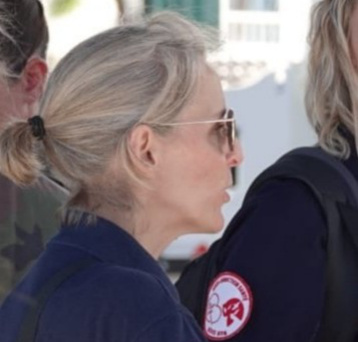
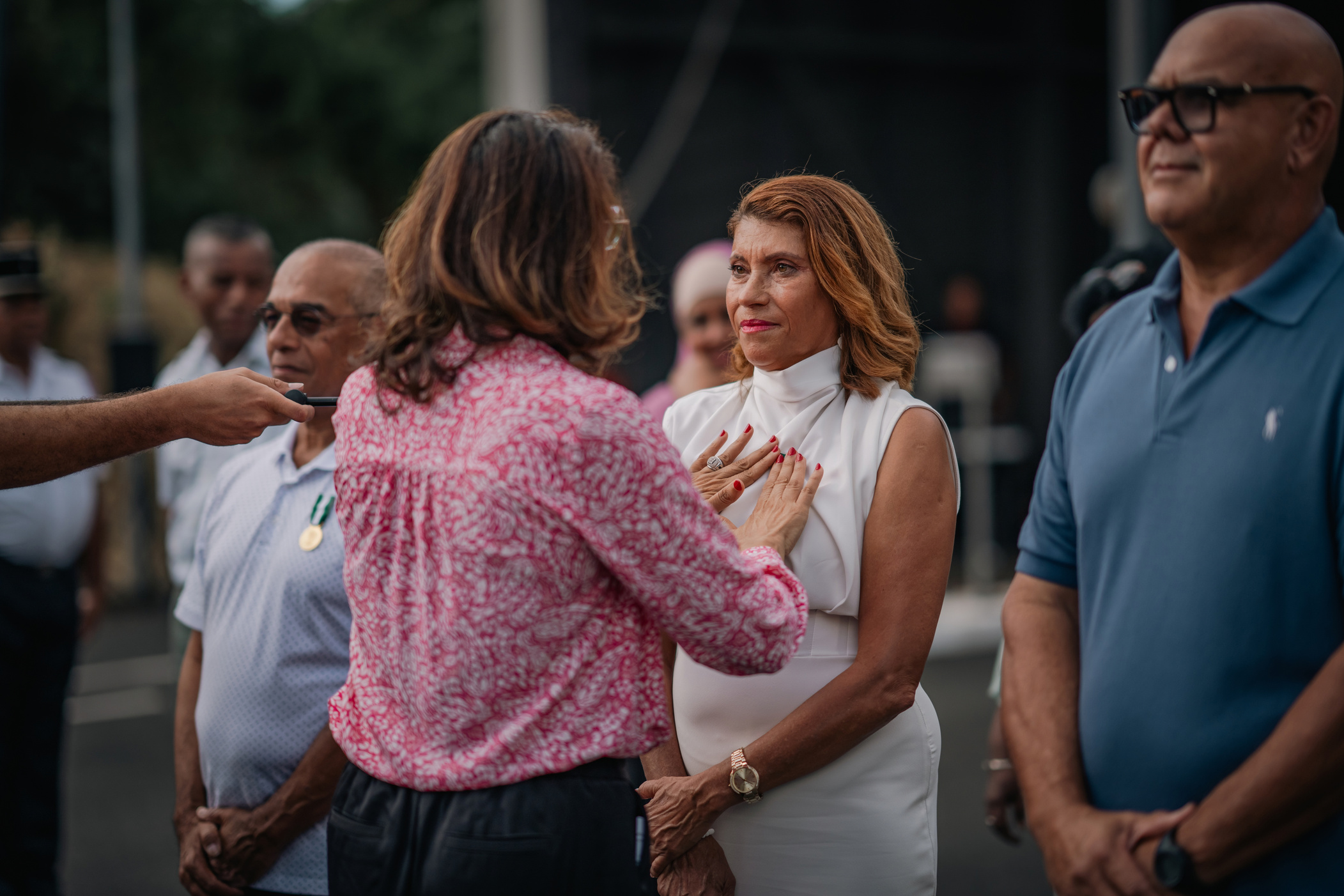
Sandrine Cartegnie at the Indian Ocean Extreme Medicine Day, Sainte-Marie air base, 16 April 2026. All rights reserved.
Fitness for duty, a time for dialogue
In consultation, she checks that firefighters are physically and mentally able to carry out their duties. A first medical assessment takes place when they join, followed by periodic check-ups to stay in service and, in some cases, a return-to-work assessment. These visits make it possible to assess each person’s health in relation to the risks of the work they do, and to establish medical fitness within a regulatory framework.
Periodic check-ups also help to prevent deterioration in health and to support firefighters through the health problems that arise over a career. For her, this one-to-one consultation is “a special time for dialogue”.
Training and support
In training, everything depends on the audience and on what is asked of her. She works mostly on fitness and preventive medicine with the teams of the SDIS health and medical service (SSSM). In December 2025 and April 2026 she co-led sessions on the “smoke toxicity” module with Renaud Depoix during training courses (FIP). She also took part in France’s National Firefighters’ Day in 2025.
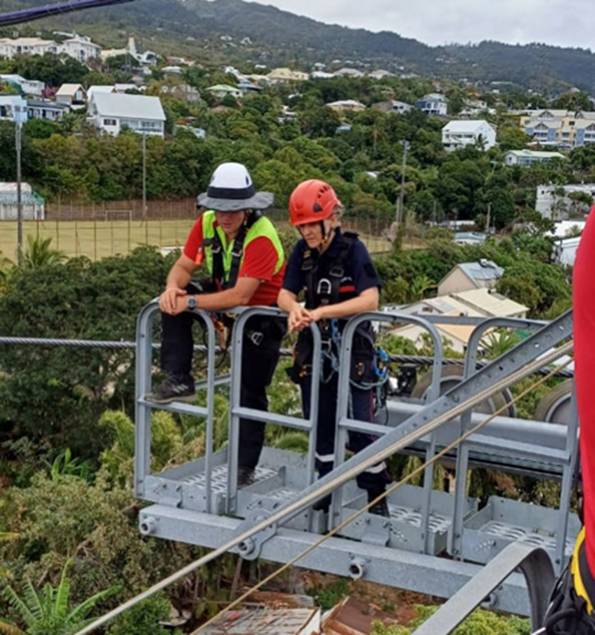
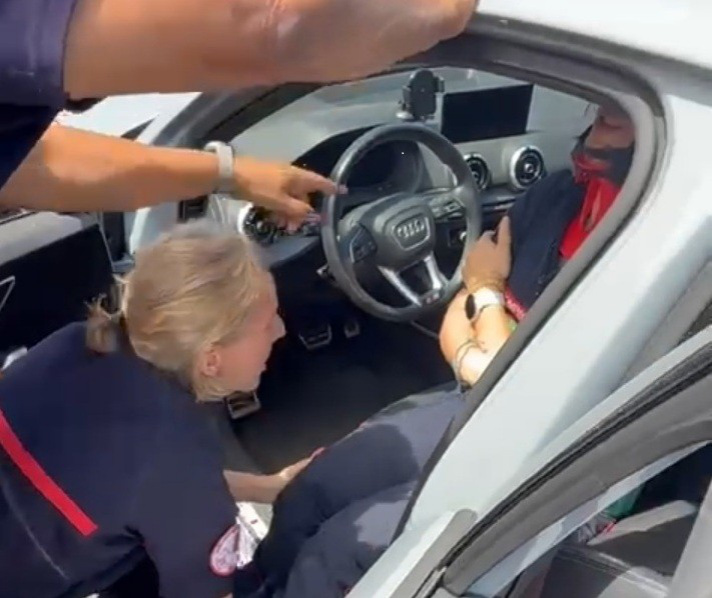
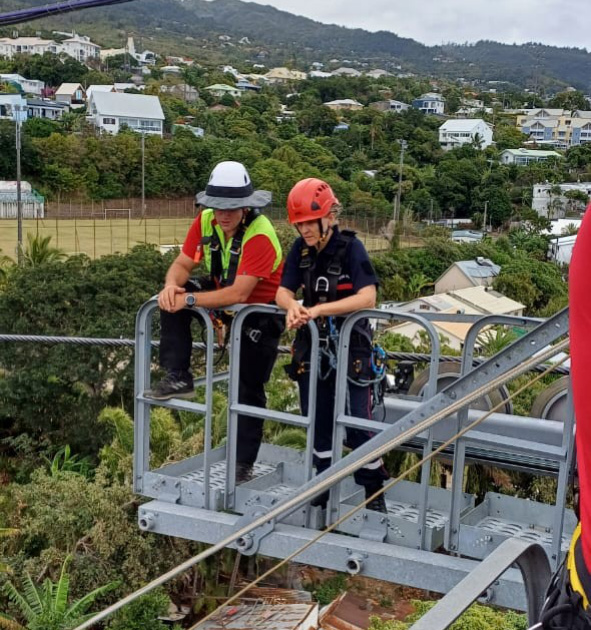
When providing operational medical support, health teams protect the firefighters deployed in the field, prevent operational risks and give them care. At some incidents, the firefighters’ health and fatigue have to be monitored, and sometimes a firefighter who is injured, poisoned or taken ill needs immediate treatment. For an occupational physician, these missions are “extremely rich in information”: they show the real operational constraints, the physical and mental demands of incidents, the environment and the protective equipment, and so help her understand better and advise better.
What firefighters give her
“My medical practice is constantly enriched.” A consultation, a conversation about firefighters’ daily work, a drill, a study of their actual working conditions, a complex fitness case, the prevention of the risks specific to their work, support for a health problem that affects someone’s ability to work: each of these feeds into her practice.
What she gives in return, she does not claim to know: “The other way round, I don’t know. I hope I bring the listening and support that are needed, with mutual respect for our respective roles and responsibilities.”
Finding the balance
Combining her profession, her volunteer commitment and her personal life is, as for anyone, “a constant search for balance”. She tries to listen to her own needs and to those of the people close to her, knowing that not everything will be perfect and that regular adjustments will be needed. “I’m lucky to have unfailing support from my family.” Wishes and obligations change with the stages of personal and professional life; she adapts “with as few regrets as possible”.
A place that goes without saying
On the place of women in the rescue services, her first answer is: “Honestly, I can’t answer that question.” Then: “The place seems obvious to me, because all of us, whoever we are, have something unique to bring. We complement each other, and the jobs cover such a wide range of missions that there is a place for every woman.”
HER ADVICE
To a young doctor hesitating to become a volunteer firefighter: “Don’t hesitate… Never give up… The work is varied, fascinating, rich in all the experience of firefighters, firefighter doctors and nurses, and all the staff who work for the SDIS.”
KEY DATES
- 2008. Specialist diploma in occupational medicine; starts practising forensic medicine in hospital, until 2015.
- 2011. Moves to Réunion.
- 2023. Joins as a volunteer firefighter doctor.
- December 2025 and April 2026. Co-leads sessions on the “smoke toxicity” module with Renaud Depoix.
GLOSSARY
- SDIS: service départemental d’incendie et de secours, the fire and rescue service of a French department, here Réunion.
- SSSM: service de santé et de secours médical, the health and medical service of the SDIS, also called 3SM.
- SSO: soutien sanitaire opérationnel, medical support for firefighters during operations.
Interview conducted in writing, in French, in November 2026. To share your story, in English or French: lignedevie@lemuseedespompiers.re
Ligne de vie · Women in rescue


Post Comment