Bernard Vélia, a life of service and heart
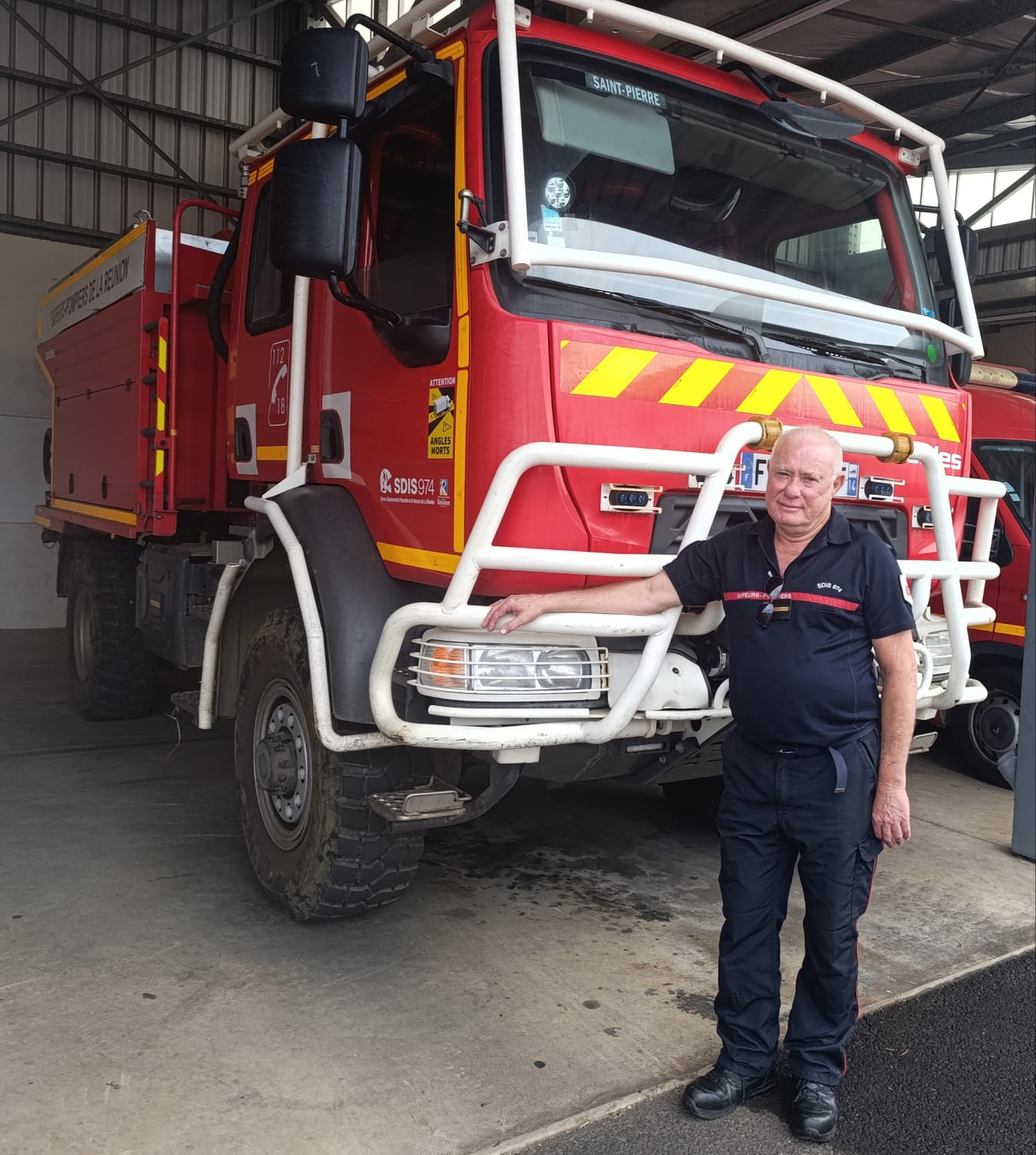
Born on 12 November 1962 in Petite-Île, Bernard Vélia grew up in a modest family, where work and a sense of duty were the guiding principles. “My father was a machine operator, my mother stayed at home,” he says with the quiet humility of those who never forget where they come from. The eldest of three children, he later passed on these values of effort and kindness to his two daughters: one became a nurse, the other a nursing assistant. “Helping people… it seems to run in the family,” he smiles. His wife, who works for the Departmental Council, shares the same idea of public service — the kind you offer without noise, but with constancy.
A childhood dream turned vocation
March 1991: Bernard puts on a firefighter’s uniform for the first time in Petite-Île. “Like many kids, I dreamed of being a firefighter. But I was lucky enough to become one.” At that time, the fire and rescue service of La Réunion was already departmentalised. Bernard joined out of idealism: wanting to be useful and to be there for others. “I never regretted it. But after some interventions, we always asked ourselves the same question: did we do what was needed?”
He recalls some missions with emotion. In the early 1990s, the sea washed up the body of a freediver who had disappeared in Manapany. Bernard climbed down the cliff alone. “We had no rescue equipment, nothing to secure ourselves. It was dangerous, but we had to try.” At each wave, his colleagues shouted, careful! He pressed himself against the rock, caught his breath, tried again. “In the end, the sea took him back. That day, I understood that you should never underestimate nature — and that acting carefully is already protecting yourself.”
Fire, brotherhood and humour
Not all memories are dark. There were also moments of camaraderie — sometimes absurd ones. “One day, we were working on a forest fire in Le Tévelave. We were redirected to help on a house fire in Saint-Pierre. So we put on full gear, ready for the blaze: helmet, leather jacket, everything. But surprise: it was a sugar cane fire!” Fully equipped for an urban fire, under a burning sun, the team literally melted. And the worst part: the truck broke down. “They told us to go home. So we did. At 3 a.m., the phone rings: ‘You are deserters!’” He laughs: “We still talk about it.”
But there were tragedies too. Around 2009, a domestic accident: a baby, sixteen months old, hit by a truck. “Depressed skull fracture. We did everything with the emergency doctor. Everything. The paediatrician said it was over.” His voice softens. “Some events… you never forget them.”
‘Back then, we did firefighting’
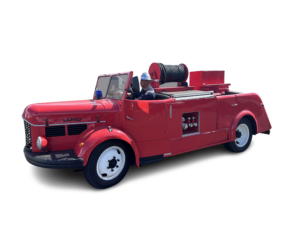
Bernard likes to remind people how much the job has changed. “In Petite-Île, we had one UNIMOG1 and that was it. Then a multi-purpose vehicle improvised by Sergeant-Major Joseph Chamand. We did first aid with whatever we had.” He remembers those early years, when improvisation replaced standard procedure: “Today, vehicles and training have made an incredible leap. The SDIS has evolved, but we must not forget: the SDIS is us.”
He talks about the trust of that time: “1 + 1 + 1 = one team.” A formula he repeats like a motto. “Trust, solidarity… I think those values are fading a little.” As crew leader on all types of vehicles since 2008, he has seen generations of firefighters grow, and he is proud to have contributed to that continuity.
The other side of the radio
In 2014, a medical restriction took him away from the field. He joined the emergency call centre (CRRA), the 18/112 regulation centre. “We managed eleven fire stations. I was operator, sometimes deputy room manager, even room manager. But it hurts a bit: you send the vehicles but you don’t go with them anymore.” When the CRRA closed, he was assigned to Saint-Pierre, where he helped set up the logistics department: pharmacy, supplies, equipment. “I left with a sense of unfinished business.”
Passing on and remembering
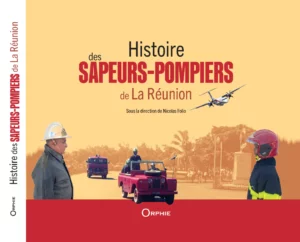
Now retired and honorary firefighter, Bernard Vélia remains deeply attached to his uniform. “You never really leave the firehouse.” He is involved in the Association of Friends of the Firefighters’ Museum of La Réunion and the Indian Ocean. “It’s a duty of memory, a duty of transmission. We experienced a time when we worked with very little, but with heart. Young people need to know where they come from. Passing on also means reminding them that no action is harmless when facing risk, and that acting in time saves lives.”
His eyes light up: “When I look at what the SDIS has become, I tell myself we did our part.” Then, after a pause: “I hope the museum will also do its part — reminding everyone that above all, being a firefighter is a story of men, women, and values.”
- Il s’agit d’un véhicule tout-terrain de marque Mercedes-Benz, utilisé comme engin-pompe ou véhicule polyvalent dans les années 1970-1990 ↩︎
- VTU (véhicule tout usage), souvent utilisé pour les interventions légères ou le prompt secours. ↩︎
- Il s’agit du centre de régulation du 18/112, chargé du traitement des appels d’urgence et du déclenchement des secours. ↩︎


Post Comment